
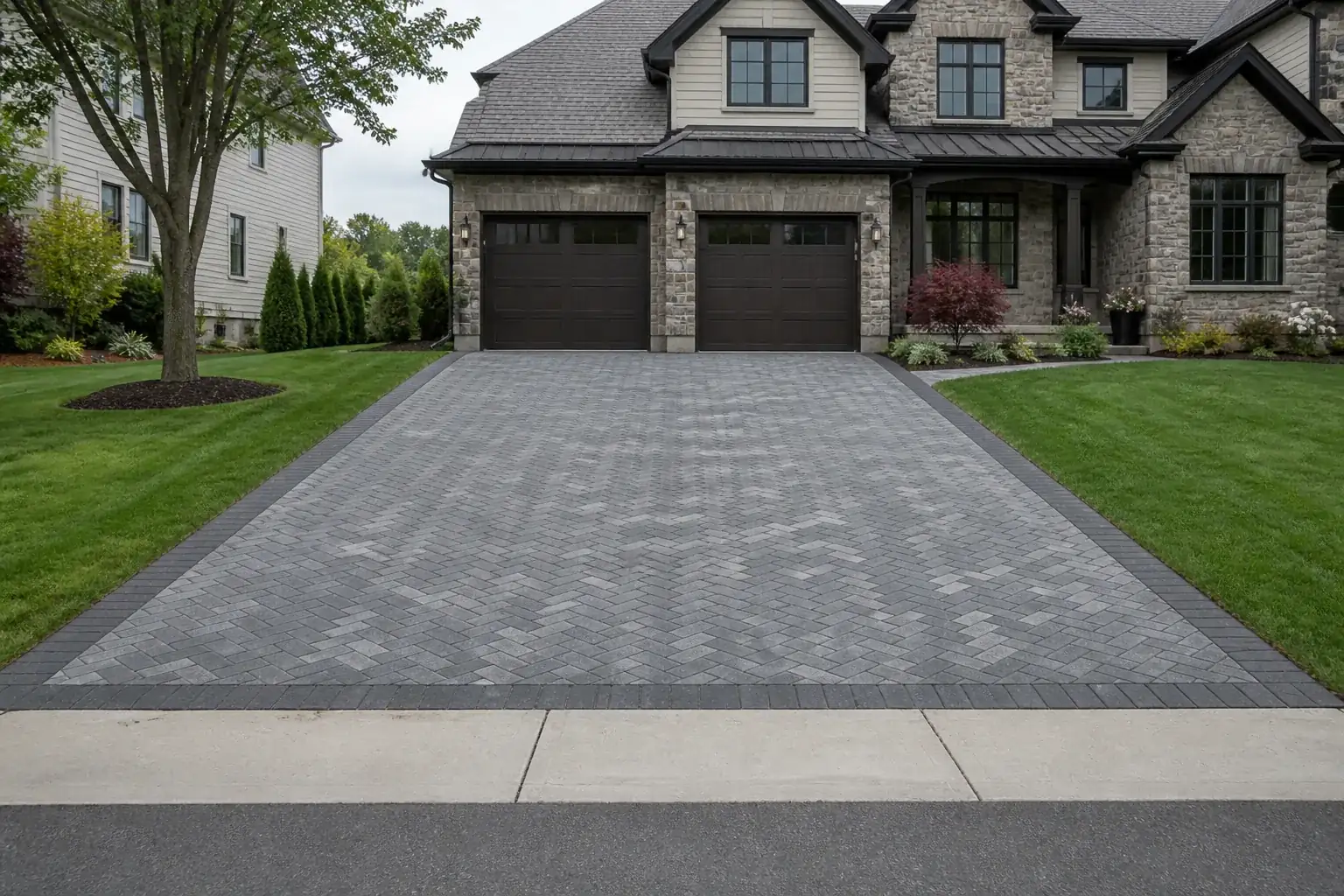
Driveways Engineered for the Weight You Park on Them
A driveway is a patio that has to survive a two-ton vehicle turning its wheels in one spot. That means a deeper base, a thicker paver and an interlocking pattern. Build one to patio spec and you get ruts within two seasons.
What is included
Every paver driveway job includes
- Load assessment: daily vehicles, delivery trucks, RV or trailer parking
- Excavation to vehicle-rated depth, typically eight to twelve inches of base
- Geotextile separation fabric over soft or clay subgrade
- Aggregate base compacted in lifts, each one plate or roller compacted
- Minimum 60mm to 80mm pavers laid in a herringbone interlock
- Concrete or heavy-duty edge restraint, apron tie-in to the street
What it costs
Paver driveways generally run $22 to $55 per square foot installed. The base depth your soil requires moves this number more than the paver you choose. Tear-out of an existing slab, apron permits and grade changes are quoted as separate lines.
Materials
Choosing what goes on top
All of these work. They differ in cost, how they age, and how much labor the install takes. We will tell you which one actually fits your site rather than which one has the best margin.
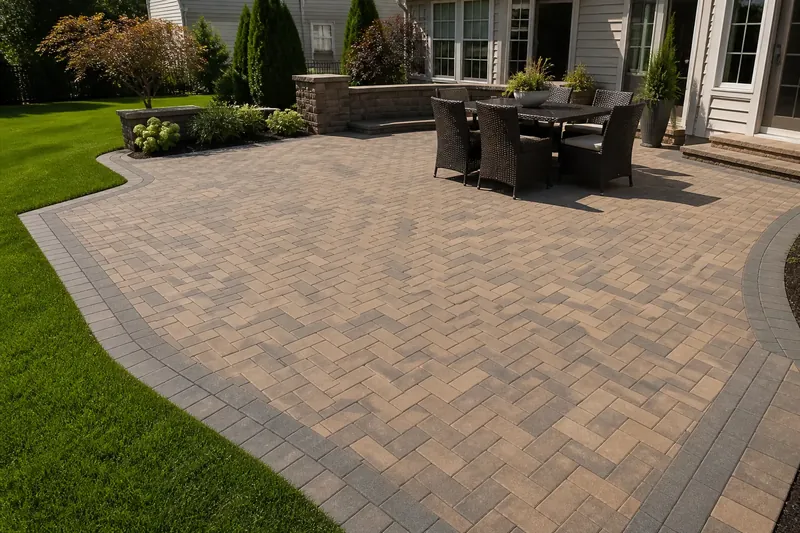
60mm concrete pavers
Standard residential driveway thickness. Right for cars and light trucks on a properly built base.
80mm concrete pavers
Heavier vehicles, RVs, frequent delivery traffic, or any driveway that doubles as a turnaround.
Permeable pavers
Open-graded joints let stormwater through into a stone reservoir. Solves runoff problems and satisfies impervious-surface limits some towns enforce.
Cobblestone
Granite or reclaimed stone, usually as banding or an apron rather than the full surface. Very durable, very expensive per square foot.
Need a new driveway?
Get a written price for your paver driveway project
Send us the basics and you get a written price back. We reply within 2 hours in business hours, and no pressure on the call.
- Line-item written quote, not a single lump number
- Insured crews, verified before they are scheduled
- 12 years in business, 5-star rated
Free paver driveway quote
Takes about 20 seconds.
5-star rated · 12 years · Fully insured · All 50 states
How it goes
From first call to walkthrough
Measure, test the subgrade, check the approach
Soil type and drainage decide base depth. We also look at how the driveway meets the street, which is where most permit questions live.
Line-item quote
Demolition, excavation, base, pavers, edge, apron. Nothing bundled into a single mystery number.
Build in stages you can live with
On single-driveway homes we plan the pour and cure sequence so you keep vehicle access where it is physically possible, and tell you plainly when it is not.
Walkthrough and joint sand
Final compaction, polymeric sand, wash down, walkthrough.
Questions
Questions we get about paver driveways
Why is a paver driveway more than a concrete one?
Most of the difference is underneath. A concrete driveway is four inches of concrete over four inches of stone. A paver driveway is eight to twelve inches of compacted, engineered base. You are paying for excavation and aggregate, and that base is exactly why it does not crack.
Will it handle a delivery truck or a dumpster?
Built to 80mm pavers over a properly compacted base, yes. Tell us up front if heavy vehicles are a regular thing, because it changes base depth and paver thickness, and it is much cheaper to design for than to repair.
What about snow plowing?
Plow it like any hard surface. Use a plow with shoes or a rubber edge so the blade rides above the pavers, and skip rock salt in the first winter while the joint sand fully cures. Calcium magnesium acetate is the safer deicer on new work.
Do permeable pavers really work?
Yes, and in some jurisdictions they are the only way to add driveway square footage without triggering stormwater review. They need an open-graded stone reservoir underneath and a vacuum sweep every year or two to keep the joints from silting up. If nobody maintains them they slowly become a normal driveway.
Can you widen or extend what I already have?
Often, though matching an existing driveway exactly is unlikely. Concrete pavers cure and weather over time, and dye lots move. Running the new section as a deliberate band or apron usually looks better than a near-miss color match.
Need a new driveway?
Tell us what you are building and where you are. You get a written, line-item quote with no obligation.