
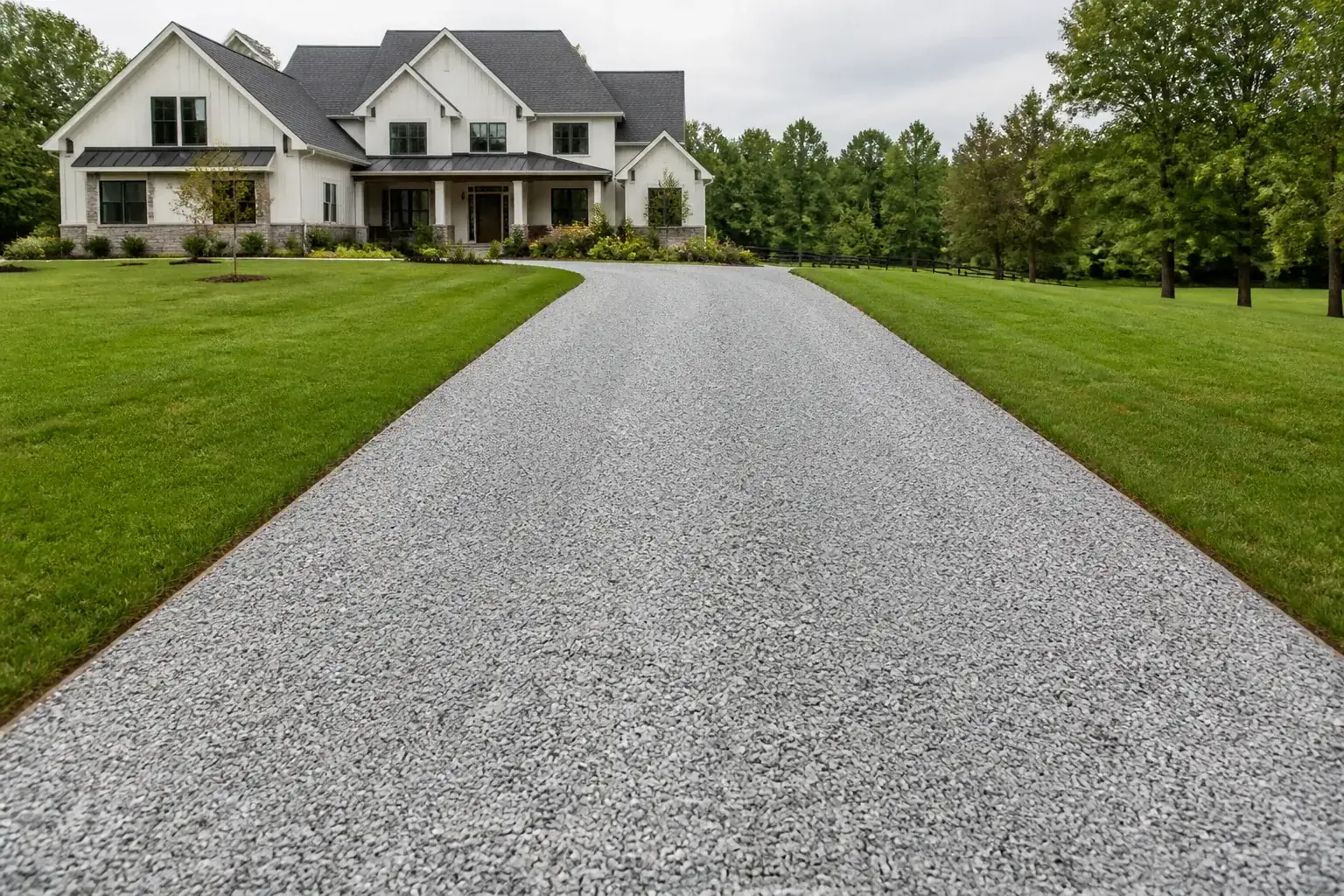
Gravel Driveways That Do Not Turn Into Mud
Most gravel driveways are stone dumped on dirt. Within a season the stone has sunk into the subgrade, the ruts hold water, and you are buying more stone every spring. A driveway built in graded layers over fabric stays where you put it and sheds water instead of holding it.
What is included
Every gravel driveway job includes
- Subgrade assessment: soil type, how wet the ground stays, where water currently runs
- Excavation to depth, with soft spots dug out and replaced rather than covered
- Geotextile separation fabric so stone and subsoil cannot mix
- Three graded layers: large stone base, mid-size binding layer, driving surface
- Compaction after every lift as the layers go down
- Crown or cross-slope built in so water leaves the driveway on its own
What it costs
Gravel driveways run $1.50 to $5.00 per square foot installed, which makes them the least expensive driveway you can build properly. Long rural drives are often quoted per linear foot or by the ton instead. The subgrade is what moves the number: wet ground and soft spots mean more excavation and more stone.
Materials
Choosing what goes on top
All of these work. They differ in cost, how they age, and how much labor the install takes. We will tell you which one actually fits your site rather than which one has the best margin.
Crusher run
Crushed stone with the fines left in. The fines bind under compaction and lock into a firm surface. The default driving layer for good reason.
Angular crushed stone
Clean, sharp-edged stone for the base and binding layers. The angles interlock and carry load. This is what makes the difference underneath.
Recycled concrete
Crushed and graded reclaimed concrete. Compacts hard, costs less than virgin stone, and is often locally available. Color varies more.
Decorative top dressing
River rock or a colored stone over a compacted base, for looks. Purely a surface course, and it needs edging to stay put.
Building a gravel drive?
Get a written price for your gravel driveway project
Send us the basics and you get a written price back. We reply within 2 hours in business hours, and no pressure on the call.
- Line-item written quote, not a single lump number
- Insured crews, verified before they are scheduled
- 12 years in business, 5-star rated
Free gravel driveway quote
Takes about 20 seconds.
5-star rated · 12 years · Fully insured · All 50 states
How it goes
From first call to walkthrough
Start with where the water goes
A gravel driveway is a drainage problem before it is a surfacing problem. Tell us where it puddles and where the runoff arrives, and photos after rain are worth more than any description.
Written quote by layer
Excavation, fabric, each stone layer with its depth and tonnage, compaction, edging. You can see exactly what is going underneath.
Build it in lifts
Excavate, lay fabric, then base, binding and surface layers, compacting each one before the next goes down.
Crown, edge and walk it
Final grading for crown, edging where the driveway meets lawn or bed, then we go over care and top-up timing with you.
Questions
Questions we get about gravel driveways
Why does my gravel keep disappearing?
It is usually not disappearing, it is sinking. Without geotextile fabric between the stone and the soil, traffic works the two together and the stone migrates down into the subgrade. You keep adding stone and it keeps vanishing. Fabric is cheap and it is the single thing most gravel driveways are missing.
Is pea gravel a good driveway surface?
No, and it is the most common mistake we get called to fix. Pea gravel is rounded, so it cannot interlock. It rolls under tires, migrates to the edges, and never firms up. Angular crushed stone locks together under compaction. Pea gravel is fine for a garden path and wrong for anything a car drives on.
How often does it need maintenance?
Expect a light regrade every one to three years to pull the crown back and knock down any ruts, and a top-up layer every three to five. A driveway built on fabric with proper layers needs far less of both than one built straight on soil.
Gravel or pavers?
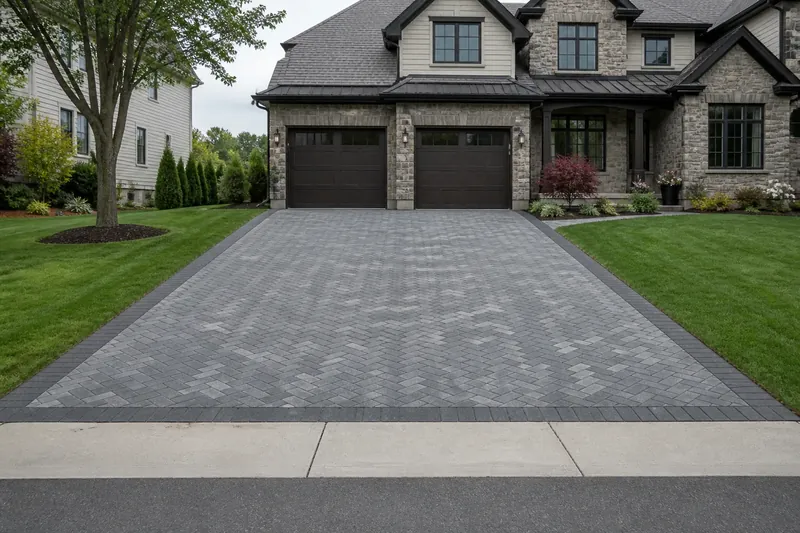
Gravel costs a fraction of pavers up front and is repairable with a load of stone and an afternoon. It also needs periodic regrading, is harder to shovel, and will never look formal. If budget is the constraint or the drive is long, gravel is the honest answer. If it is a short suburban drive you want to look finished, pavers earn their price.
Can you plow it in winter?
Yes, with a plow shoe or a skid set high so the blade rides above the stone instead of scraping it into the yard. Plowing a gravel drive at ground level is how a season of snow removal ends up costing you a load of stone.
Can you go over an existing gravel driveway?
Often, yes. If the existing stone is still a reasonable base we can regrade it, add fabric where the subgrade is failing, and build fresh layers on top. Where the whole thing has sunk into clay, the honest answer is that it needs to come out first.
Building a gravel drive?
Tell us what you are building and where you are. You get a written, line-item quote with no obligation.